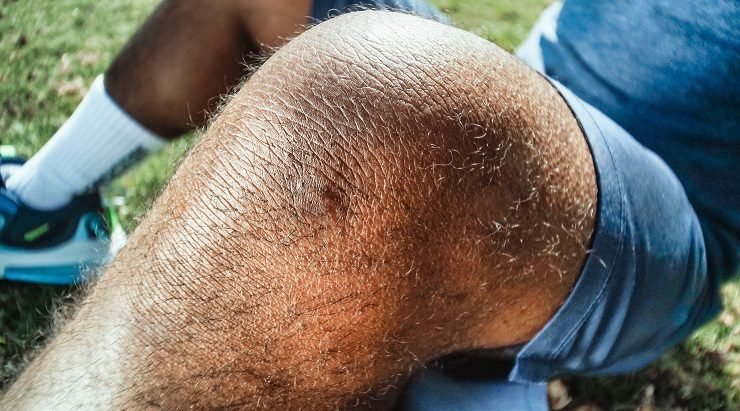
Before discussing the ACL post-rehabilitation program, we should learn about knee Anatomy and its functions. The knee is the weight-bearing joint, which means it carries all your body weight and helps in the extension and flexion of the legs. A knee has bones, ligaments, tendons, and meniscus. The knee connects the femur, tibia, and patella bones with the help of ACL, PCL, MCL, and LCL ligaments. The knee comprises two types of cartilage, namely, meniscus and articular cartilage that reduce the pressure on the knee because of joint lubrication.
According to a search, the knee is the most commonly injured joint by adolescent athletes, with an estimated 2.5 million sports-related injuries annually (Reference).
In this article, we will highlight the ACL issues. ACL stands for anterior cruciate ligament; it helps support your knee. ACL Provides balance by connecting the femur to the tibia bone. You may have heard sportspersons, such as football players and basketball players, have a tear in their ACL that causes too much pain. Later, athletes who want to participate in these sports must undergo the post-rehabilitation procedure after surgery.
ACL post-rehabilitation program
Purpose of Post-rehabilitation
The primary purpose of post-rehabilitation is to make the person fully recover or pain-free after surgery. In other words, the Post-rehabilitation program for ACL surgery aims to help the athlete move his knee joint freely, enhance functional stability, and repair muscle strength.
Week 1: Full extension and 70 degrees of flexion
What to do: Wear knee brass, and get the supports from crutches during the walk. Continuous use of icing helps to lessen swelling. A patient has to focus on getting a full extension within 1 to 2 weeks.
- Week 3 to 4: Better control
During this week, the patient should have more control over the quadriceps and hamstring muscles and must reduce the use of crutches.
- Week 5: Exercise Time
Now is the time to do hamstring and quadriceps exercises by starting closed-chain exercises. Intensity should be 50 percent and gradually increases to 60 percent.
Warming up with jogging, stretching for hamstring, thigh, and calf, and strengthening exercises such as toe raises.
- Week 10: Dynamic Movements
Now it is time to do some dynamic movements and isokinetic exercises like a stationary bike.
- Month 3: Functional Movements
After three months, a patient can perform functional movements, such as running and jumping. It can be more challenging by increasing resistance, enhancing the speed, and making the task harder.
As time progresses, you can add some plyometric moves that will help increase the strength of the quadriceps and hamstring muscles.
Recommendation:
- Nine months of rest is enough; the patient can start doing normal life activities now.
- Till 15 months after The Post rehabilitation of the ACL, the patient should examine the knee.
- The following factors have a good impact on knee movement later on
- Focus on knee extension is essential to cooperate with successful ACL post-rehabilitation.
- Weight-bearing gives a patient considerable benefit in decreasing patellofemoral pain.
- The inclusion of closed kinetic chain exercises recovers the patient rapidly.
Conclusion:
Hence, the ACL post-rehabilitation procedure takes time to heal the patient completely. The patient has to listen to his therapist. He should perform exercises within limits and must follow the exercise order. Moreover, monitoring the exercise intensity during each phase or a week before moving to the next stage is better. In short, the patient should be patient throughout rehabilitation to get astonishing results.